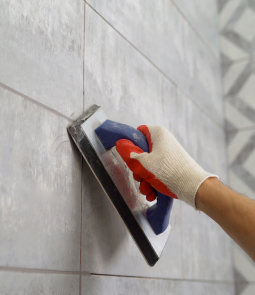

Regrouting & Grout Repair
1. Q: How much does it cost to regrout a shower in the Lawrenceville / Gwinnett area?
A: Regrouting a standard shower typically costs less than a full retile and is priced by the square footage and condition of the existing grout. We serve Lawrenceville, Snellville, Duluth, and the surrounding Gwinnett area, and we provide a firm written quote after a quick on-site assessment so there are no surprises. Pricing depends on tile size, grout type, and how much old grout needs removal.
2. Q: Can old grout be repaired, or does it all need to be replaced?
A: In most cases, old grout can be repaired or selectively replaced rather than torn out entirely. We remove cracked, stained, or crumbling grout, then re-grout and seal the affected areas to match the rest of the surface. Full replacement is only necessary when the grout has failed across the whole installation, or there's underlying water damage.
3. Q: How do I know if my grout needs repair or full replacement?
A: Cracking, persistent discoloration, gaps along edges, or a soft/spongy feel when pressed are the main signs that grout needs attention. Hairline cracks and surface staining are usually repairable; widespread crumbling or loose tiles can point to a deeper problem. We inspect throughout Gwinnett, Barrow, and Walton counties and tell you honestly which option you actually need.
4. Q: How long does a regrouting job take?
A: Most residential regrouting jobs are completed in one to two days, depending on the size of the area and drying time. A single shower or backsplash is often a one-day job, while larger floors or whole-bathroom work may run longer. We'll give you a realistic timeline as part of your quote.
Tile Installation & Replacement
1. Q: Do you install new tile as well as repair grout?
A: Yes, we handle both new tile installation and replacement of damaged or outdated tile across the Gwinnett, Hall, and Jackson county areas. That includes floors, showers, backsplashes, and accent walls. Because we specialize in tile and grout, the finish work and grout lines are done to a higher standard than general remodelers typically provide.
2. Q: Can you replace just a few cracked or loose tiles?
A: Yes, we can replace individual cracked, chipped, or loose tiles without redoing the entire surface. The key is matching the existing tile, so it helps if you have spares — but we can usually source a close match if not. We serve homeowners from Suwanee and Buford down through Loganville and Monroe.
3. Q: How much does tile installation cost per square foot near me?
A: Tile installation is generally priced per square foot, and the total depends on the tile type, surface prep needed, and the complexity of the layout. Natural stone, large-format, and intricate patterns cost more to install than standard ceramic. We provide free, itemized estimates throughout the greater Lawrenceville and Athens service area.
4. Q: What kind of tile lasts longest in a bathroom or shower?
A: Porcelain and quality ceramic tile are the most durable and water-resistant choices for bathrooms and showers, with natural stone being beautiful but requiring more sealing and maintenance. The longevity also depends heavily on proper installation and grout sealing — which is where specializing in tile work makes a difference.
Shower & Bathroom Restoration
1. Q: Can you restore a moldy or water-damaged shower instead of replacing it?
A: In many cases yes — we restore showers by removing damaged grout and caulk, treating the area, and resealing to stop water intrusion, rather than ripping out the whole shower. Full restoration is far less expensive than a remodel when the underlying structure is sound. We assess shower condition throughout Gwinnett, Walton, and Hall counties.
2. Q: Why does the caulk and grout in my shower keep turning black?
A: Black staining in shower grout and caulk is almost always mold or mildew growing where moisture gets trapped. Surface cleaning helps temporarily, but lasting results come from removing the affected grout/caulk, treating the area, and resealing properly. We restore showers across the Lawrenceville, Snellville, and Winder areas to stop the problem at the source.
3. Q: How long does a shower restoration take before I can use it again?
A: Most shower restorations are finished in one to two days, with additional cure time before the shower should be used again — typically 24 to 48 hours depending on the products used. We'll give you exact "do not use" timing so the seal sets correctly and lasts.
4. Q: Is shower restoration cheaper than a full bathroom remodel?
A: Yes — restoring a sound shower by regrouting, recaulking, and resealing costs a fraction of a full remodel. Restoration makes sense when the tile and structure are in good shape but the grout and seals have failed. We help homeowners across Duluth, Buford, Gainesville, and Athens decide which option fits their situation and budget.
Grout Cleaning & Sealing
1. Q: Can dirty grout be cleaned to look new again?
A: Yes, professionally deep-cleaned grout can look dramatically better and often close to new, especially when followed by sealing. Household cleaning only reaches the surface, while professional cleaning lifts embedded dirt from the porous grout. We clean and seal tile floors, showers, and backsplashes throughout Gwinnett, Barrow, and Oconee counties.
2. Q: How often should grout be sealed?
A: Most grout should be resealed every one to two years, though high-traffic floors and wet areas like showers may need it more often. Sealing protects grout from staining, moisture, and mold by keeping liquids from soaking into the porous surface. We can set you up with a sealing schedule based on how each area is used.
3. Q: Does grout sealing actually prevent stains and mold?
A: Yes — a proper grout sealer significantly reduces staining and mold by blocking moisture and dirt from penetrating the grout. It doesn't make grout indestructible, but it makes cleaning easier and extends the life of the work. Sealing is most effective right after a professional cleaning or regrout.
4. Q: Is professional grout cleaning worth it versus doing it myself?
A: Professional grout cleaning is usually worth it when DIY scrubbing no longer restores the color, because pros use equipment and methods that reach deep into the grout and finish with a protective seal. For light upkeep, home cleaning is fine — but for restoring badly stained grout, professional cleaning and sealing gives longer-lasting results. We serve the full Lawrenceville-to-Athens corridor.
Other Common Questions
1. Q: Do you serve my area?
A: We serve Gwinnett, Barrow, Walton, Jackson, Hall, and Oconee counties, including Lawrenceville, Snellville, Duluth, Suwanee, Buford, Winder, Monroe, Loganville, Gainesville, Flowery Branch, Athens, and Watkinsville. Message us with your zip code to confirm.
2. Q: Do you offer free estimates?
A: Yes — we provide free, written, itemized estimates after a quick on-site assessment, so the price is clear before any work begins.
3. Q: Can you fix a moldy shower without a full remodel?
A: In most cases, yes. If the tile and structure are sound, we restore the shower by removing failing grout and caulk, treating the area, and resealing — at a fraction of a remodel's cost.
4. Q: Do you just clean grout, or repair it too?
A: Both. We offer professional cleaning and sealing as well as full regrouting, tile repair, and tile installation.